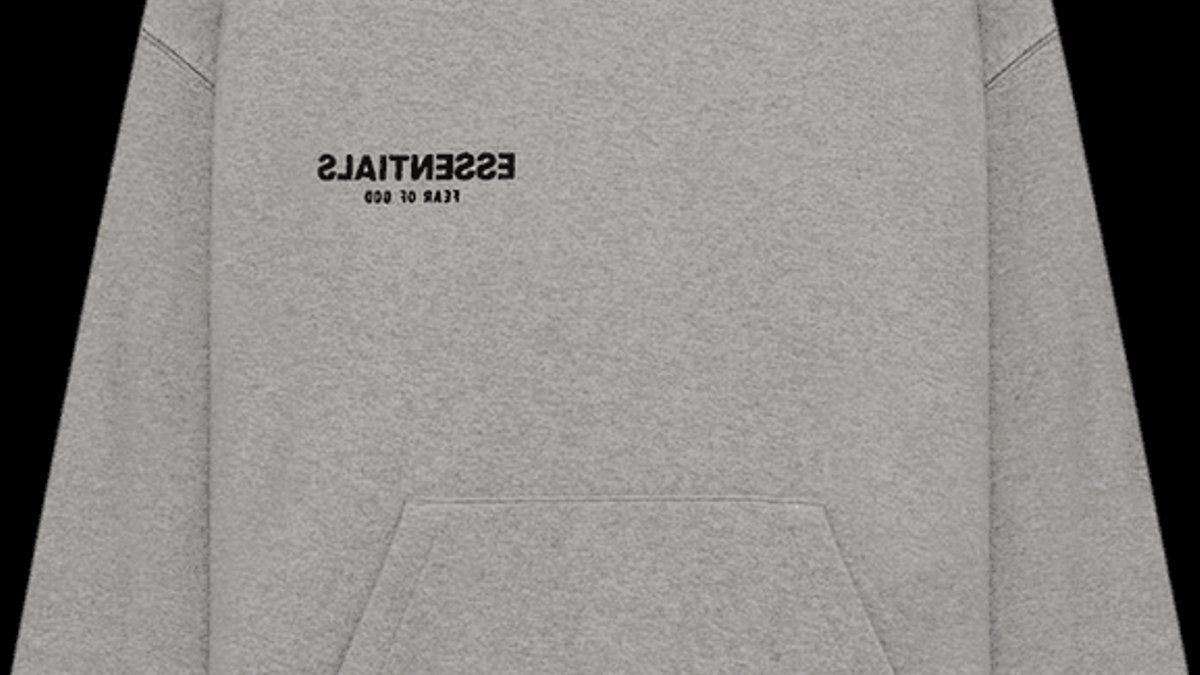
Hold two fleece hoodies side by side, and they can look identical on a phone screen. Same boxy shape, same muted color, same logo sitting flat across the chest. Then you pick them up, and one of them just feels like more garment. Denser. Cold to the touch for a second. Heavier in the shoulders.
That gap is fabric weight, and it decides almost everything about how a pullover ages. Most people shopping Essential Clothing are buying a silhouette they already like. The material underneath is what determines whether that silhouette still exists in eighteen months.
The Fabric Story
The line has been running since 2018, and the fabric story stays fairly consistent even when the color range doesn’t. Heavy fleece, mid-weight cotton jersey, a rubber logo. That’s basically the whole list. But the specifics matter more than a three-item list suggests.
Fleece gets talked about in GSM, grams per square meter, and all it tells you is how much cloth got crammed into a given patch of the thing. Cheap mall fleece lands in the 200 to 300 zone, and you can feel roughly where it sits without ever seeing the figure — light, a bit papery, limp at the elbows after a couple of months. The classic fleece here is up around 380.
This is a wide gap, about a third more material in the same square foot. All that weight holds the cloth slightly off your body instead of letting it pour down onto you, so a boxy chest and a dropped shoulder stay boxy and dropped instead of turning into an ordinary sweatshirt shape. You can see it on a hook. A 380 GSM fleece hangs there with its outline intact while a 220 GSM folds in on itself and looks a little sad.
Warmth follows the same principle, more or less. One heavy fleece will carry you through a 45°F Chicago morning with nothing over it, assuming the wind isn’t doing anything dramatic. Below freezing, you’ll want a shell on top, because fleece traps air and that’s its primary function. It doesn’t block wind.
Read Also: Choosing the right everyday layer
Jersey tees in this collection are made from mid-weight cotton, so they’re not sheer. Hold a $12 tee up to a window, and you’ll see what sheer means — the chest logo shows through from the back. These tees don’t do that. Mid-weight cotton hangs rather than clings, which you notice on a humid afternoon when a thinner shirt would be stuck to your back.
Price and Colors
Price-wise, the tees are currently at $75, down from the $260 to $290 range. The colors include Classic Gray, Core Black, Dark Brown, and similar shades. Slim Fit White stands out, as it’s cut closer than the rest, which is worth noting if you’re accustomed to the roomier fit of the other options.
People often misjudge the Essentials Shorts. They use the same heavyweight fleece as the hoodies, making them warmer than typical nylon athletic shorts. Available in Black, Light Beige, Peach, or Light Brown, they look like summer wear but perform better in cooler conditions. At 95°F in Phoenix, fleece shorts might be uncomfortable, but at 70°F on a June evening or in an over-air-conditioned office, they make sense. They’re priced between $80 to $85 on the site.
The logo on these garments sits on top of the cloth with a slightly raised matte edge. It’s made of rubber, flocked on some pieces, rather than screen printed. Screen printing fades slowly over years, while rubber doesn’t fade; it cracks.
The failure mode is different. A printed logo gradually becomes pale and chalky, often going unnoticed. A rubberized logo looks brand new until heat affects it, then it splits along short lines that don’t heal. Direct iron contact can cause this in one pass, while a hot dryer might take a dozen loads.
A useful tip is to turn the garment inside out before washing, use cold water, and air dry or use the lowest heat setting on your dryer. This care helps preserve both the logo and the body length.
Read Also: Conversational AI Guides Shoppers to Perfect Handbags
Drops are seasonal and limited, so if you order a second piece, don’t expect an exact match to the first. Colors like Sage, Sycamore, Plum, Seafoam rotate, and the hand feel of fleece can vary slightly between seasons, even under the same color name, due to batch sourcing.
The changes are minor. If your last Dark Brown hoodie felt a certain way, the next one might be slightly softer or crisper. Usually, one wash eliminates most of this difference.
Fleece tends to pill where it rubs, such as under the arms, along the side where a bag strap sits, or at the cuffs. Heavier fleece pills more slowly than lighter fleece, but it still pills. The looped interior also flattens over time, which is why an older hoodie feels smoother and slightly less warm than when new.
Weight and construction are key factors. A 380 GSM pullover costs more to produce than a 250 GSM one, more cotton, heavier thread, and seams that support the extra mass. You feel this difference immediately, and it remains noticeable after two years.
Sizing is also tied to the fabric. The cut is unisex and intentionally runs large. Choosing your normal size gives you the roomy fit this line is known for. Dropping one size brings you closer to a regular fit. If you’re between sizes, consider going down unless you prefer sleeves that cover your hands.
Sizing and Fit Considerations
The fleece shorts and other garments in this line feature a unisex, intentionally oversized cut. Buyers can choose their usual size for a roomy fit or drop down a size for a more regular silhouette. Those in between sizes may prefer sizing down, unless an extremely relaxed fit is desired.





Leave a Reply