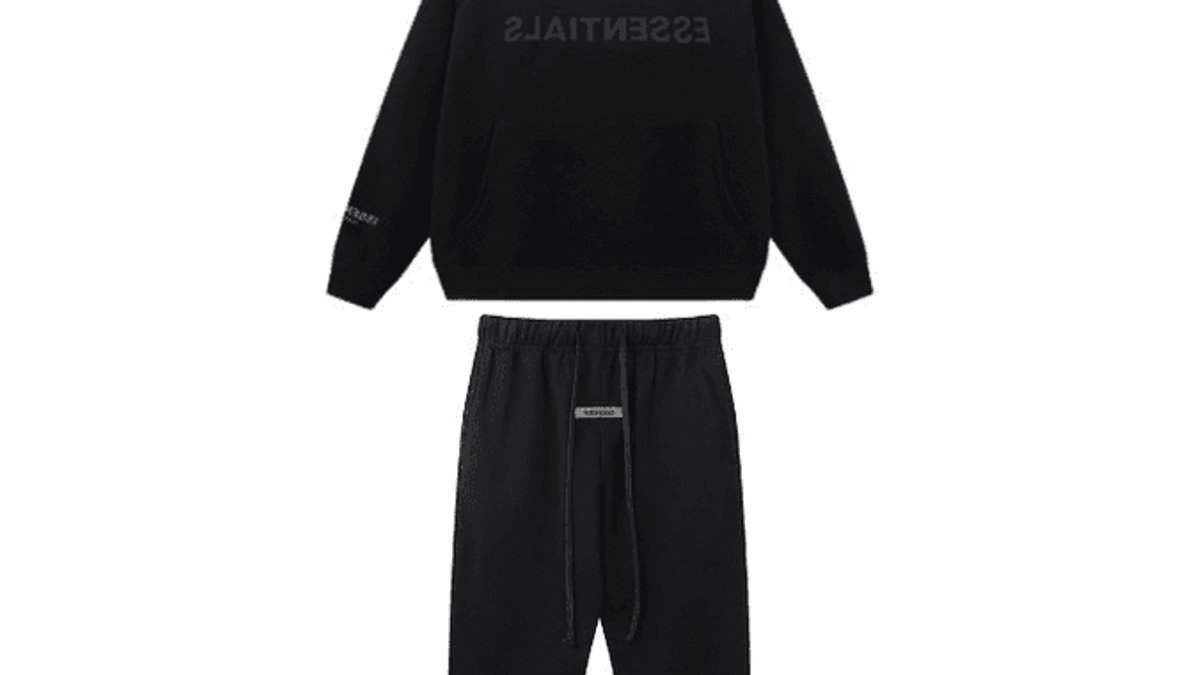
When it comes to choosing an everyday layer, the decision between a hoodie, a tracksuit top, and a plain crewneck can be a difficult one. For people who wear Essentials Hoodies during the shoulder seasons, it’s common to end up owning more than one shape of them.
The idea that 40% of body heat is lost through the head is a common myth that has been debunked by a 2008 piece in the BMJ, which found that the real share is roughly 7 to 10%. This myth may lead people to choose a hood for the wrong reason.
A hood does provide some benefits, such as covering the neck and ears from wind and drizzle, but it’s not a heat vault. The real benefit of a hood is the cover it provides without having to carry anything in your hands.
Comparing the Options
When comparing a hoodie, a zip-through track top, and a plain crewneck, the differences become clearer. The same fleece is used in all three, with a thickness of about 380 GSM, so the decision comes down to what the front does and where the neck ends up.
The zip-through track top offers more control than the pullover, which can be useful in changing temperatures. Canadian shoulder weather can have a significant temperature gap between daily highs and lows, making it essential to have a layer that can adapt.
Read Also: Conversational AI Guides Shoppers to Perfect Handbags
A pullover gives you two settings, while a zip gives you a dial, allowing you to adjust the level of warmth and protection to suit your needs. This can be particularly useful when moving between heated buildings and cold streets.
However, when layering under a coat, a hood can become a problem. Under a structured collar, it can bunch up and push the collar off the neck, while under a parka, it can create a tunnel effect and restrict peripheral vision.
A crewneck, on the other hand, layers flat and allows a collar to show, making it a good option for wearing under a long overcoat. Sizing the shell up by about one to one and a half sizes can help, but opinion splits on whether to wear an oversized fleece under a bomber or puffer.
When it comes to choosing the right top, it’s essential to consider the weather and activities you’ll be doing. If you’ll be outdoors in one steady temperature, a pullover may be the way to go.
The bottom half matters more than people think, since volume up top wants something straighter below it.
Read Also: Nigerian streetwear brand redefines global fashion with bold African identity
Ultimately, the decision comes down to which type of morning you experience most often. Consider your actual needs and choose a top that provides the right level of warmth, protection, and control.
The CCOHS puts comfort at 21 to 25 °C in light clothing, 18–23 °C in something heavier.
A normal Tuesday can hand you a 9 °C platform, a 22 °C office, and a 14 °C walk home, all in one garment.
Layering and Versatility
Cotton fleece isn’t windproof at all, so 0 °C with a 30 km/h wind can go straight through it. And cotton drinks water, then dries slowly, which is why November in Vancouver is a real problem, with YVR averaging 174.6 mm of rain over 19.6 wet days that month.




Leave a Reply