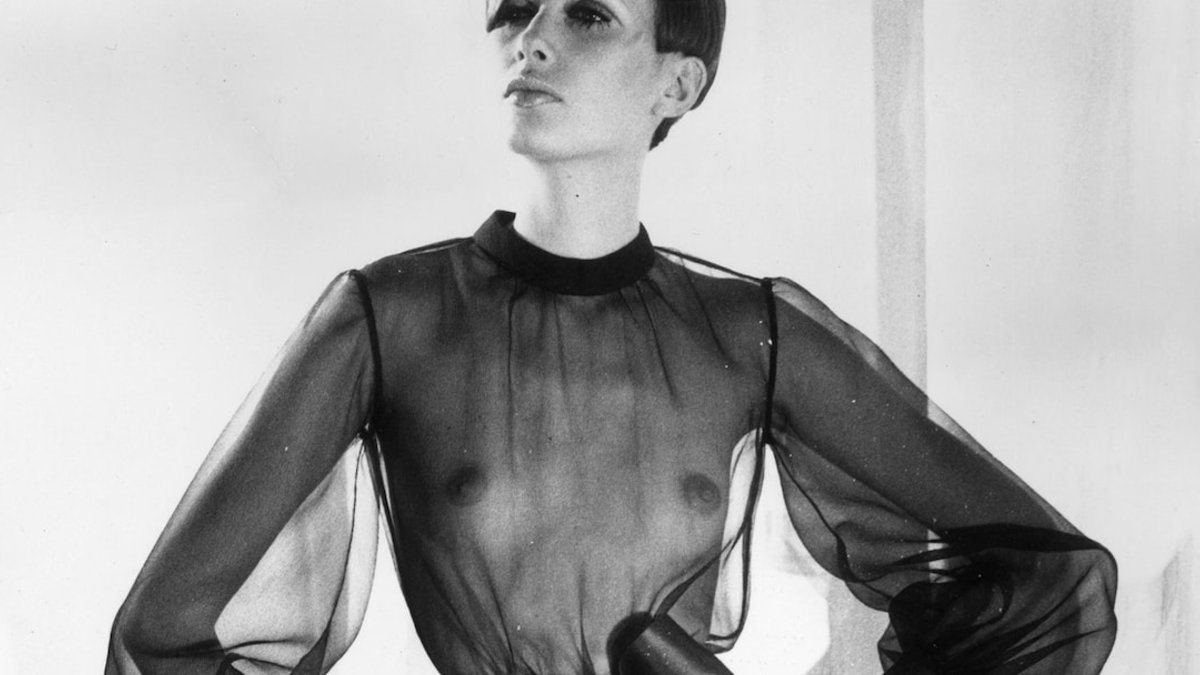
Yves Saint Laurent was a man addicted to sex appeal, and his designs often reflected this. “Nothing is more beautiful than a naked body,” he said in the late 60s after debuting his first nearly nude designs. On August 1, 2026, the legendary designer would have turned 90 years old, so to celebrate, we’re looking back at his most important acts of sexual liberation throughout the 60s and 70s.
One of the most potent symbols of sexual freedom at YSL are the sheer blouses and gowns. Saint Laurent liberated the female form in 1966, when he debuted his first see-through designs at his SS66 haute couture show.
More sheer dresses arrived in 1968, and the most famous example was born: a floor-length, transparent chiffon dress belted by a ruff of ostrich feathers around the hips. Though the late 60s were an era of sexual revolution, YSL’s daring designs went against the status quo of conservative Parisian style, and pioneered naked dressing in the mainstream.
Related: Young American Men Abandon Trump, Bromance Ends
Saint Laurent didn’t always have to undress women to reinvent sex appeal. At his AW66 couture show, the designer shocked the world when he debuted Le Smoking, AKA a sleek, black, traditional tuxedo jacket. That might sound pretty ordinary, but the jacket – one that men traditionally wore to protect from cigar smoke – caused a stir when Saint Laurent made a version for women.
“For a woman, the tuxedo is an indispensable garment in which she will always feel in style, for it is a stylish garment and not a fashionable garment,” he said at the time. Though his haute couture clients initially rejected the design, Saint Laurent launched his ‘Rive Gauche’ ready-to-wear line in September 1966, and its younger clientele made the jacket a success.
Le Smoking revolutionised the way women dress, reinterpreting female sex appeal through an androgynous, masculine lens. In 1967, Saint Laurent was invited to create the costumes for Catherine Deneuve’s character Séverine Serizy in Belle de Jour, a film by director Luis Buñuel.
Related: Markle visits Princess Diana’s childhood home with family
The erotic novel adaptation follows a young housewife who leads a double life as a high-class sex worker, and Saint Laurent’s wardrobe had to reflect that duality. A-line dresses and knee length peacoats were mixed in with suggestive silks, tactile furs and a black vinyl trench coat, the latter of which became a defining garment of the character’s transgressive style.
In 1968, Saint Laurent threw tradition out the window and replaced the wedding dress with a bridal bikini at his SS68 show. The model, with her long veil and strategically placed floral arrangements, shocked the fashion press at the time, but once again tapped into the sexually liberated mood of the 60s.
In 1977, Saint Laurent pushed this ethos to the max with the launch of his Opium perfume, an intoxicating mix of vanilla, patchouli and myrrh. While the name of the perfume attracted controversy for its orientalist themes and reference to the opium drug trade, the accompanying campaign was seen as overtly sexual too.
Related: Subculture Hair Artist Pablo Kuemin Transforms Runway Looks
Shot by fashion provocateur Helmut Newton, the moody photograph sees a young Jerry Hall reclined in apparent ecstasy, her eyes closed and lips parted with the tagline “Opium, for those addicted to Yves Saint Laurent” in gold lettering above. Despite the controversy, the fragrance launch was a colossal success, earning a significant amount in its first year of sales.
Saint Laurent’s designs continue to influence the fashion world, with his sheer dresses and Le Smoking jacket remaining iconic symbols of sex appeal and liberation. As we look back on his legacy, it’s clear that he was a true pioneer in the world of fashion, always pushing boundaries and challenging societal norms.
He was a master of reinvention, and his influence can still be seen today, with many designers drawing inspiration from his work.




Leave a Reply