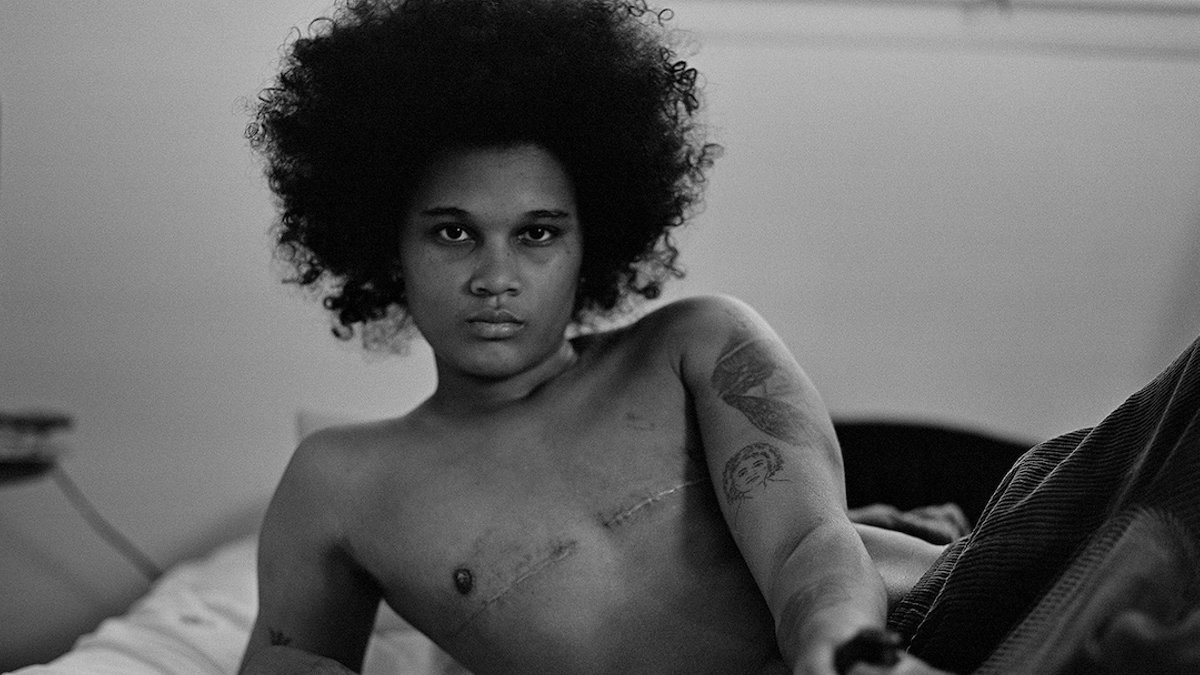
Photographer Lindsay Perryman’s new series Tops captures the quiet intimacy of a transmasculine friend group, offering a counter-narrative to the political climate surrounding gender-affirming care. The project centers on Perryman and their chosen family—Dani, Kelee, Cat, Paps, Melani, Blazie, and Zaire—documenting the friendships that have grown alongside their gender journeys. By focusing on the lived reality of trans and non-binary individuals, Perryman aims to show a side of queer identity that is defined by joy and connection rather than political polarization. The collection features archival pigment prints and a 2024 short film monograph currently on view at CLAMP in New York, with additional pieces held in the permanent collection at the Leslie-Lohman Museum of Art.
Perryman studied fashion at the undergraduate level before pursuing a photography master’s degree at Parsons School of Design. During this time, they created a zine titled The Colors We Don’t See at the End of the Rainbow, which featured portraits of Black studs and Black women with masculine presentations. They describe the academic environment as less helpful than their personal history in understanding the nuances of queer experience. Their artistic practice draws heavily from their upbringing, recalling a household filled with cameras and family photos plastered on the walls.
Related: Is the Quest for Longevity Dead
The work presented in Tops spans from 2021 to 2025, reflecting on the physical and emotional changes that occur within a tight-knit circle. Perryman notes that the series captures transmasculine vulnerability, particularly through the lens of self-portraiture. In discussing their own top surgery, they described a complex mix of relief and grief. “There was a part of your body that you’ve had all your life – and I felt lighter – but there was definitely something missing,” they said. This sentiment reflects the reality of transitioning: the body changes, the community supports the individual through the recovery process, and the individual must reconcile the loss of a former version of themself while adopting a new identity.
While the project highlights the physical changes associated with top surgery, Perryman emphasizes that the work is broader than surgery alone. The film monograph includes non-binary and queer friends, framing the narrative around how community shows up for one another. The series serves as an archive of experiences that might otherwise go undocumented, preserving the tenderness of these relationships for future viewers.
Related: Balloon Pants Become Summer 2026 Fashion Staple
Art as resistance
Perryman’s artistic influences include Jess T Dugan, whose series Look at me like you love me and Every Breath We Drew explore similar themes of queer intimacy. They also cite Texas Isaiah and Collier Schorr as key touchstones in their development as a photographer. Despite the current political climate in the United States, which has seen increasing hostility toward the LGBTQ+ community, Perryman remains committed to their practice. They view the work not just as documentation, but as a form of resistance against the rhetoric that seeks to erase trans identities.
Exhibiting work that centers trans joy and friendship in a time of political attack provides a necessary counterpoint to the negative narratives dominating headlines. The exhibition at CLAMP runs until August 28, 2026, giving New York audiences a chance to see the series in person. For those viewing the prints, the experience offers a moment of validation, allowing them to see their own lives reflected in the work and feel a sense of belonging.



Leave a Reply