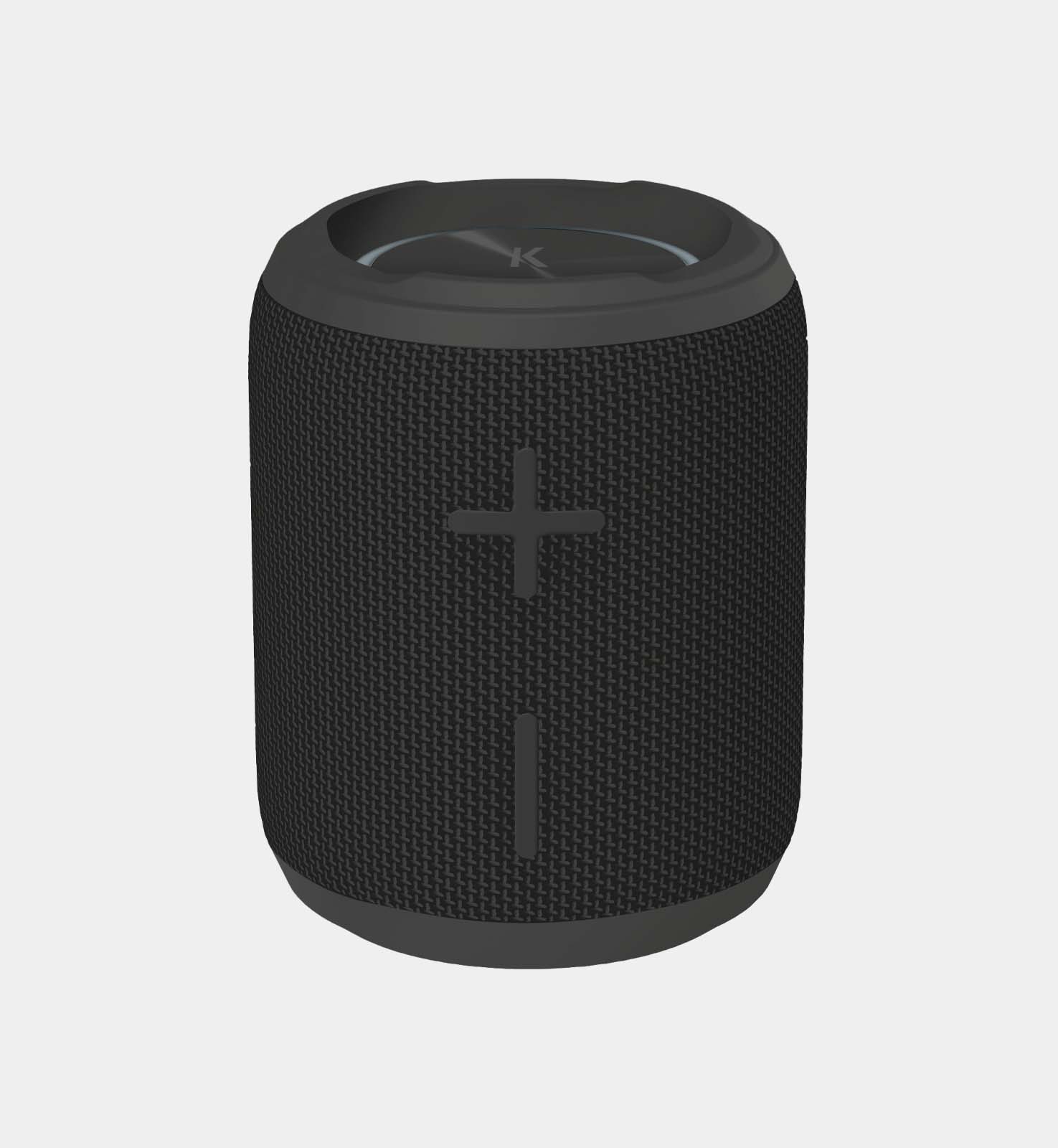
Selecting the ideal portable audio setup requires cutting through marketing noise to evaluate raw technical specifications. Audio performance depends on driver architecture, wireless bandwidth, battery chemistry, and structural protection. Sound reproduction must remain clear and balanced whether listening at a quiet desk or across an open outdoor space.
Technical Architecture and Audio Processing
Audio fidelity starts with physical driver configuration. Compact enclosures must balance active drivers with passive radiators to deliver clean low-end frequencies without mechanical distortion. Dual passive radiators push deep bass tones from smaller frames, while dedicated tweeters handle precise vocal clarity.
Digital Signal Processing controls audio dynamics in real time. Advanced chipsets prevent high-volume clipping, adjust equalizers based on volume levels, and keep vocals crisp over heavy basslines. Modern Kove Audio bluetooth speakers codecs maintain high-bitrate audio transmission across connected devices, ensuring your wireless signal retains full detail without dynamic compression or latency delays.
Durability and Power Management
Outdoor reliability relies on solid construction ratings. Ingress Protection scores show exact environmental resistance levels, with an IP67 or IP68 rating guaranteeing full dust protection and complete water submersion defense. Molded rubber bumpers and reinforced housings absorb impact energy from drops without cracking internal solder joints or breaking seals.
Battery capacity requires looking beyond total playback hours. High-capacity lithium-ion cells maintain stable voltage output at high volumes, preventing audio degradation as power drains. Universal USB-C power delivery allows rapid charging, while select models offer reverse power-bank charging to keep source devices active during extended playback.
Surface Integrity: Why Metal Surface Finishing Matters in Modern Manufacturing
Metal surface finishing dictates the operational lifespans, structural stability, and failure thresholds of fabricated components. Raw machined parts carry microscopic burrs, tool marks, and exposed atomic structures that act as immediate points for stress concentration, oxidation, and rapid friction wear. Applying engineered surface treatments transforms basic metal shapes into high-performance industrial components capable of enduring extreme operational demands.
Mechanical Protection and Wear Resistance
Friction constantly degrades moving mechanical components. Surface treatments such as anodizing, electroless nickel plating, and thermal spraying apply ultra-hard barrier layers that significantly lower friction coefficients. These coatings protect base alloys from galling, micro-fretting, and adhesive wear under heavy physical loads.
Removing surface micro-imperfections through shot peening or electropolishing eliminates microscopic stress points where fatigue fractures typically start. Distributing mechanical stress evenly across the component surface allows finished parts to withstand millions of continuous power cycles without structural failure.
Environmental Barrier Defense and Chemical Resistance
Atmospheric oxygen, humidity, and aggressive industrial fluids immediately attack untreated metal surfaces. Chemical passivation and conversion coatings strip free iron contaminants from stainless steel alloys, forcing the formation of a dense, self-healing oxide film that blocks corrosive agents.
Finished surfaces prevent galvanic corrosion when dissimilar metals interact in shared assemblies. Advanced barrier finishes keep harsh chemicals, saltwater spray, and extreme heat cycles from penetrating to the core metal, preventing costly component failures and dangerous equipment breakdowns.
Manufacturing Precision and Process Optimization
Surface finishing controls vital functional tolerances alongside physical protection. Controlled electropolishing provides uniform dimensional reduction down to micron levels, ensuring precise fitment inside complex hydraulic valves and aerospace assemblies. Smooth surface finishes optimize fluid dynamics by minimizing boundary layer turbulence inside liquid transport manifolds.
Chemical finishing processes also prepare surfaces for secondary bonding operations. Creating consistent surface energy and controlled micro-topography ensures structural adhesives, specialized rubber seals, and protective paints form permanent bonds that will not delaminate under thermal expansion.
Conclusion
Industrial manufacturing success relies directly on rigorous surface finishing protocols. Transforming raw metallic stock into finished components requires protecting parts from mechanical wear, environmental degradation, and micro-fractures. Skipping proper finishing steps inevitably leads to premature component failure, unplanned maintenance downtime, and reduced operational safety. Investing in precise mechanical and chemical surface finishing ensures maximum product durability, optimal performance, and long-term economic value across every manufacturing application.





Leave a Reply