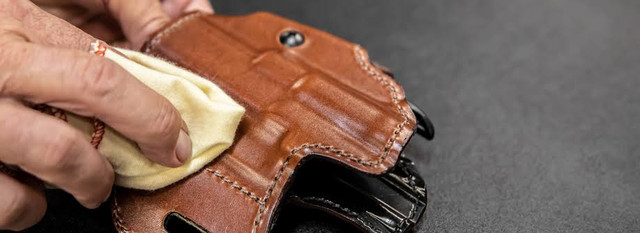
Cleaning leather holsters properly preserves its rigid shape and structural integrity while preventing firearm corrosion. Unlike soft leather goods, a firearm holster relies on molded tension and chemical balance to retain your weapon safely. Submerging the leather in water or using harsh household detergents strips the natural oils, causing the material to soften, warp, or crack. Developing a careful, dry-focused cleaning routine removes sweat salts, dirt, and oil accumulation without compromising the safe retention qualities of the gear.
Removing Surface Debris and Dry Contaminants
Clearing dry grit and loose dust from the interior and exterior surfaces prevents the formation of abrasive buildup. Tiny particles of sand, lint, and unburnt gunpowder collect inside the crevices of a daily-carry rig over time. If left unattended, this hidden debris acts like sandpaper, scratching your firearm finish and wearing down the interior leather grain.
A soft-bristled brush or a dry microfiber cloth allows you to sweep away loose particles safely. Paying extra attention to the deep stitching channels and the trigger guard mold ensures no friction points remain. For stubborn dust buried deep inside the muzzle exit, a quick blast of low-pressure compressed air clears the channel without introducing harmful moisture.
Managing Sweat and Moisture Penetration
Neutralizing salt deposits from body sweat prevents the leather from becoming brittle and damaging your firearm finish. Concealed carry holsters constantly absorb ambient body heat and moisture, which carries corrosive skin salts deep into the pores. As the moisture evaporates, the trapped salt dries out the fibers, accelerating leather rot and attracting rust to your handgun slide.
Wiping the exterior panel with a barely damp, lint-free cloth breaks down the dried salt rings effectively. Following this light wipe down with an immediate dry cloth application ensures no lingering moisture pools in the molding details.
Choosing the Right Specialized Cleaning Agents
Utilizing mild, pH-balanced leather soaps ensures the material maintains its original tensile strength and chemical composition. Industrial degreasers, rubbing alcohol, and dish soaps break down the specialty tanning agents used in premium gun leather. These aggressive chemicals permanently destroy the stiff fibers required to keep the holster mouth open for one-handed reholstering.
Applying a minimal amount of dedicated glycerin-based saddle soap or specialized holster cleaner solves tough oil spots. Rubbing the cleaner in gentle circular motions creates a light film that lifts body oils and holster wear grime effortlessly. Buffing the surface immediately afterward with a clean towel ensures no sticky residue remains to trap future dust.
The Golden Rules of Holster Drying
Drying your leather gear naturally prevents irreversible shrinkage and structural warping. Exposing wet leather to artificial heat sources alters the molecular bond of the hide, ruining the custom weapon fit.
Allowing the rig to rest in a well-ventilated, shaded area ensures the fibers contract evenly back to their molded shape. Rushing this process with heat vents causes the leather to become hard, brittle, and prone to snapping under stress.
Conclusion
Proper leather holster maintenance requires a disciplined balance of minimal moisture, gentle cleaning agents, and patience during the drying phase. Protecting the molded shape of your rig ensures your firearm remains securely seated during movement while allowing a smooth draw. Avoiding common shortcuts like dunking the gear or using intense heat sources preserves the premium hide for a lifetime of service. Taking a few minutes to brush away debris and neutralize salt buildup secures your investment and keeps your carry system dependable.





Leave a Reply