Australia’s population is ageing rapidly. The Australian Institute of Health and Welfare reports that people aged 65 and over made up 18 percent of the population in 2024–25, up from just 8.9 percent in 1975–76. By 2065–66, that share is projected to reach 24 percent. Yet clothing and footwear remain a consistent part of spending for retirees, according to the Australian Bureau of Statistics. Age-pensioner and self-funded-retiree households continue to allocate budgets to jackets, shoes, eyewear, and grooming products.
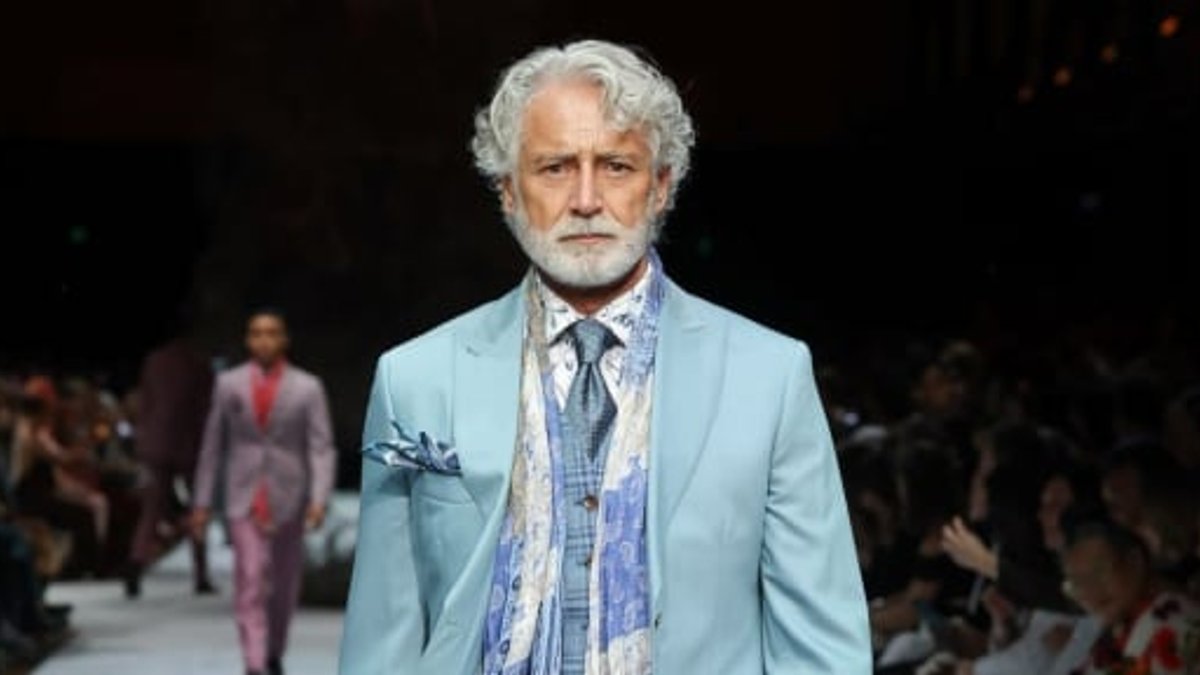
The disconnect is visible in fashion imagery. While campaigns increasingly feature a wider range of bodies and identities, older faces are still rare. One photographer who has worked as a model at Australian Fashion Week and the Melbourne Fashion Festival, including for designers like Christian Kimber, MJ Bale, and Dom Bagnato, notes that age becomes less of an issue once an older model is actually on the runway. “The clothes remain the story,” they say. “A well-cut suit does not suddenly stop working because the man wearing it has silver hair.”
This experience suggests that some of fashion’s assumptions about age may be more about habit than strategy. The industry has long adhered to strong conventions around who appears in campaigns or on runways, but those boundaries have shifted before. Once a convention changes, the old standard often feels arbitrary. The photographer argues that Australian fashion is capable of similar rethinking, without abandoning youth or pretending every campaign must represent every generation.
For brands targeting customers across multiple decades, showing that range more authentically could have commercial as well as cultural benefits. Representation feels most genuine when it reflects actual buyers, not just a checkbox. An older man in a campaign, for example, should be there because men his age purchase the product, wear it well, and belong in the imagery, not because of a quota.
This matters particularly in menswear. Many men develop a stronger interest in style as they mature, investing in fit, quality, and individuality. Yet the marketing often implies that style itself has an expiration date. The solution, the photographer says, is not a revolution but curiosity: casting a wider net, including older models in the process, and judging them by the same standards as everyone else.



Leave a Reply